Having made the firm decision to return to full time education or face heading towards retirement in some boring, badly paid or physically demanding job (I had just spent 4 ½ years landscaping and knew at 47 I was getting too old for it) I went looking for a computer related course.
As soon as I came across the game dev course in Glyndwr, Wrexham I felt a wave of excitement and knew instantly it was what I wanted to do. A pure computer science degree seemed mind numbing by comparison and with a life-long passion for gaming and a longing to do something more creative, it was the obvious choice.
Having been away from higher education for 25 years it made sense to take on the foundation year. An opportunity to get used to full time study again after a long break, and chance to build my skills to a level where I would not feel overwhelmed. A head-start if you like.
The year was to be split into two semesters with 3 modules taught in each semester.
Due to the ongoing coronavirus pandemic, the teaching for the whole year was anticipated to be done purely online as proved the case. I was unsure how successful this would be as it was a new situation for both students and lecturers to deal with, but it worked extremely well.
Semester One
The first three modules comprised of Design & Technology, Game Studies and a module titled ‘The skills you need’. Each with its required assignments to be completed.
Design & Technology involved working as a pair on a mobile phone application design of our choice. Starting with a Jackson Structured Program (JSP) design, pseudocode and initial wireframes, and progressing onto an interactive powerpoint and console application coded in C#.
I quickly settled on the idea of a ‘PC Builder’ app, one that would give the facility to produce a list of parts for a build, offer approximate prices, offer links to suppliers and review sites and provide a compatibility check to ensure all parts would function together.
My project partner said he would prefer to do the art side of things, so he did the wireframes and interactive powerpoint while I did the JSP diagram, pseudocode and eventually the C# console application.
I feel like the project went quite well and enjoyed it, although learning C# from scratch and getting the application to work was a real challenge! In retrospect I would certainly have spent more time getting familiar with object-oriented programming techniques in C# before I started coding. The final console application took hundreds of lines of code and a lot of time to get functioning properly. It could have been done in a lot simpler fashion and I learned a lesson there!
Game studies was an essential subject for anyone hoping to go forward and learn to design and develop computer games. With two assignments we were given a good grounding in how games work, what keeps players playing, and techniques involved in taking a concept to prototype, testing and further iterations of the process.
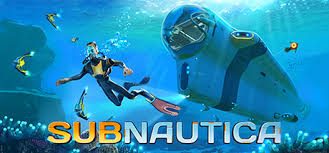
The first assignment was an informal blog on one of our favourite games, a chance to ‘tear it apart’ and examine the finer points of the mechanics and design, enabling us to work out exactly why we love it so much. I chose ‘Subnautica’ and relished the chance to play through it again with a different view on the game, all the while making notes as to what specifically made it such great fun. I feel like I learnt a lot from this, understanding what works and what doesn’t when it comes to design and mechanics.
Assignment two allowed us to advance with our new-found knowledge about game design and produce something. In this case, a non-digital game. I made a board game from scratch for the first time in my life – ‘Auto Barney’, and had fun building it and testing it with my peers. There is a reflective piece elsewhere on this blog about the game, so I won’t expand any further on it here.
Overall, I would say this module was a crucial building block for anyone hoping to go into game development. It gave me a lot to think about. Understanding engagement loops, and the importance of solid design and mechanics is something I will carry forward into further study.
‘The skills you need’ module was aptly titled, and for someone who had been out of education for 25 years pretty useful. Research and referencing were the two main areas of focus and our assignments involved producing an academic poster and writing an academic report.
I chose ‘Microtransactions and financial ethics in computer games’ as my academic poster subject. I felt like it was a topic worthy of discussion as the phenomenon of ‘loot box addiction’ had been in the news and a former work colleague had developed a compulsion to buy player packs on the Fifa football game to the point where he spent £900 in two months. He realised he had developed a problem and deleted the game at that point! It was fascinating to discover that Electronic Arts who produce Fifa football were historically the first to introduce microtransactions to games!
For the academic report I chose AI and the Technological Singularity. Another fascinating subject, the emphasis on this assignment was good research techniques and clear and extensive referencing.
A worthwhile subject, I feel like I have learnt techniques and skills that will be of use in future study. I had only ever used Harvard referencing previously, so learning to use IEEE was essential as it is the standard for computing related topics.
Semester Two
The second three modules consisted of Contextual Studies, Game Design Fundamentals and a Game Design Project.
The game design project involved producing a working computer game as part of a team. We developed ‘The Tree and the Bashful City’. A separate detailed blog on this is to be found elsewhere on this site, so I won’t expand on it any further here.
Contextual Studies involved a brief overview of a number of topics and a weekly hour-long discussion group. Many of the topics we looked at were interesting, and the weekly discussions gave insight into the opinions of others. Everybody looks at the world through different eyes and it certainly proved that not all people think the same.
Our assignment for this was to produce a short reflective piece of writing on the 6 topics of our choice. I learnt a few interesting facts and any expansion of knowledge is to be welcomed.
Game Design Fundamentals proved to be my favourite module of the foundation year. We were to study two pieces of software that are complex yet almost essential to anyone wanting to progress in learning to make computer games:
Autodesk Maya – Industry standard 3D sculpting, rigging and animating tool. Used by thousands to create 3D objects and characters of professional standard. We were tasked with creating a 3D sculpted model inspired by the ‘fallout guys’ characters.
I had a feeling I was really going to struggle with this task, but I enjoyed the experience of starting with a square block and finally having a passable character sculpted from it. The software is deeply complex and versatile, but through this process we learnt some fundamental skills. I feel a lot more prepared for this kind of work going forward into future years as a result!
Unreal Engine / Editor – Again, industry standard software. A game engine well known and widely used to produce professional AAA titles. We were tasked with building a level for our Maya character to play in. Some simple mechanics, moving objects and obstacles were to be included. A win/lose condition was to be attached and some animation of our ‘bean guy’ character was to be included if possible.
I really enjoyed this task. I loved getting to grips with Unreal engine – was impressed with its versatile ‘blueprint’ alternative to coding facility and can’t wait to get a deeper understanding of how it works. The potential for producing quality games is immediately visible and I can see why it is so widely used in the industry.
Overall this module was an extremely impressive grounding in creating 3D animated characters and level creation. Some of my fellow students really excelled in this module and I look forward to seeing others work. My own results are less than perfect (I have posted a link to a youtube clip of my character and level at the end of this blog), but as a first attempt I am really pleased and look forward to progressing further.
In conclusion
Well what a year! From trepidation about what to expect, concerns over the effect of the Coronavirus epidemics impact and personal worries as to whether I was still capable of study at this level I feel like it has gone surprisingly well!
It has been an overwhelmingly positive experience. I suppose I expected a much gentler introduction with it being a foundation year. I had no idea I would be left with a sense that I have made a huge level of progress towards the ultimate goal of being able to develop computer games at a professional level.
Thanks to a bunch of enthusiastic, helpful and friendly fellow students and a couple of great lecturers it has flown by and I have learned more than I could have imagined. I feel more confident in my own abilities moving forward and look forward to starting the first year in the autumn.
My summer plans are to complete some courses in C++ and Unreal Engine Blueprinting and to take part in a small game making project with some fellow students hoping to add to our portfolios.
 Geoffwinton.com